
 Home
Home
- News
-
All news
Latest news

Sep 12, 2025 /
iPhone 17 Series: Everything You Need to Know

Feb 21, 2025 /
The Future of Foldable Phones

Feb 17, 2025 /
iOS vs. Android: Which Operating System is Better in 2025?

Feb 17, 2025 /
OnePlus 13 Pro: What to Expect from OnePlus’s 2025 Flagship
-
- Reviews
-
All reviews
Latest reviews

Jan 16, 2020 /
iPhone XS Max review

Jan 16, 2020 /
Moto G7 Power review

Jan 16, 2020 /
Samsung Galaxy S10 Plus review

Jan 16, 2020 /
Samsung Galaxy S10 review

Jan 16, 2020 /
Google Pixel 3 review

Jan 16, 2020 /
Hands on: Samsung Galaxy Note 10 Lite review
-
Latest News


Latest Reviews
Popular devices
All smartphones could soon use the same charger
Jan 16, 2020 Administrator News 190 hits
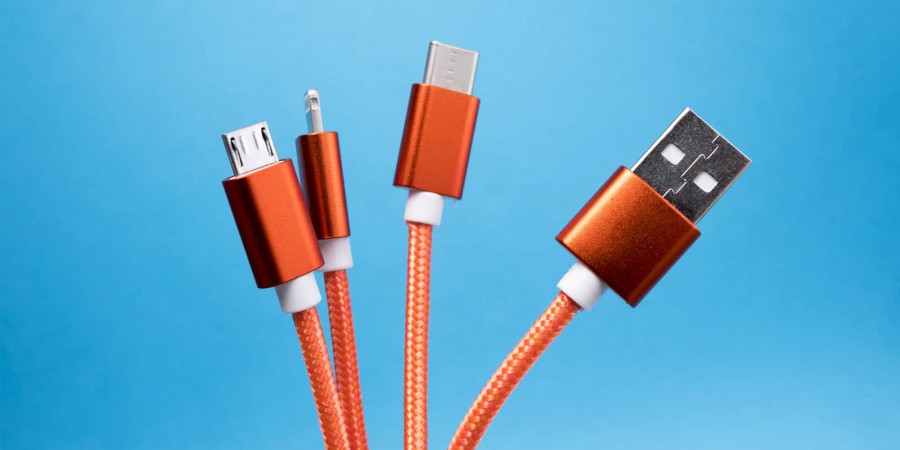
The era of tangled cables and incompatible chargers may soon
be over. In a groundbreaking move, the European Union (EU) has mandated that
all smartphones, tablets, and other portable devices must adopt a universal
USB-C charging port by 2025. This regulation aims to
reduce electronic waste, simplify consumer experiences, and promote
sustainability. As the world’s largest smartphone manufacturers, including
Apple, Samsung, and Google, prepare to comply, this shift could have
far-reaching implications for consumers, businesses, and the environment.
The Push for a Universal Charger
The EU’s decision to enforce a universal charger stems from
a decade-long effort to address the growing problem of electronic waste.
According to the EU, unused and incompatible chargers generate
approximately 11,000 tonnes of e-waste annually, costing consumers
an estimated €250 million in unnecessary purchases.
The new regulation requires all smartphones,
tablets, cameras, headphones, and handheld gaming consoles sold in the
EU to feature a USB-C port for wired charging. Laptops will follow suit
by 202628. This move ensures that consumers can use a single
charger for multiple devices, reducing clutter and promoting reuse.
Why USB-C?
USB-C has emerged as the universal standard due to its reversibility,
fast charging speeds, and high data transfer rates. Unlike older
connectors, USB-C is compact, durable, and compatible with a wide range of
devices, from smartphones to laptops.
For consumers, this means no more fumbling with cables or
carrying multiple chargers. For manufacturers, it simplifies production and
reduces costs. However, the transition has not been without challenges,
particularly for companies like Apple, which has long relied on its
proprietary Lightning connector.
Impact on Major Manufacturers
Apple’s Transition to USB-C
Apple has been one of the most vocal opponents of the EU’s
mandate, arguing that it stifles innovation and could lead to more e-waste as
consumers discard their old chargers. However, the tech giant has begun
transitioning its devices to USB-C, starting with the iPhone 15 in
2023.
The shift to USB-C is not entirely new for Apple. The
company has already adopted the standard for its MacBooks, iPads, and
AirPods. By aligning its entire product lineup with the EU’s requirements,
Apple aims to streamline its operations and avoid the costs of producing
region-specific devices.
Samsung and Google’s Compliance
Samsung and Google, both of which have long used USB-C in
their devices, are well-positioned to comply with the new regulations.
Samsung’s Galaxy S25 Ultra and Google’s Pixel 9 Pro already
feature USB-C ports, offering fast charging and seamless compatibility with
other devices.
For these companies, the transition is less about compliance
and more about leveraging the universal standard to enhance user experiences.
For instance, Samsung’s Galaxy AI features and Google’s Tensor
G4 chipset are designed to work seamlessly with USB-C-enabled
accessories.
Environmental and Economic Benefits
The universal charger mandate is expected to have
significant environmental and economic benefits. By reducing the need for
multiple chargers, the regulation could save consumers €250 million
annually and cut e-waste by 11,000 tonnes.
Moreover, the shift to USB-C promotes interoperability and innovation.
For example, the latest USB-C specifications support ultra-fast
charging and high-speed data transfer, enabling new
features like spatial video recording and AI-driven
camera processing.
Challenges and Criticisms
While the universal charger mandate has been widely praised,
it is not without its challenges. Critics argue that the regulation could
stifle innovation by forcing manufacturers to adhere to a single standard.
Additionally, the transition may lead to short-term e-waste as consumers
discard their old chargers.
Another concern is the lack of global harmonization.
While the EU has taken the lead, other regions, such as the United States and
Asia, have yet to adopt similar regulations. This could create disparities in
the global market, with manufacturers producing region-specific devices to
comply with local laws.
The Future of Charging Technology
As the world moves towards a universal charger, the focus is
shifting to wireless charging and next-generation
battery technologies. For instance, resonant coupling technology could
enable room-scale wireless charging, eliminating the need for
charging pads altogether.
Similarly, silicon batteries and quantum
charging are poised to revolutionize the way we power our devices.
These technologies promise higher energy density, faster
charging speeds, and improved durability, addressing some of
the most persistent challenges in the smartphone industry.
Conclusion
The EU’s universal charger mandate marks a significant step
towards a more sustainable and consumer-friendly future. By adopting USB-C as
the standard for all portable devices, the regulation simplifies the charging
process, reduces e-waste, and promotes innovation.
While challenges remain, the benefits far outweigh the
drawbacks. As major manufacturers like Apple, Samsung, and Google embrace the
new standard, consumers can look forward to a world where one charger works for
all their devices.
Sources
- Gepard PIM - Unified USB-C Charger
- Tom’s
Guide - Best Phones 2025
- Euro Weekly News - Universal Charger
- Mobility Arena - Universal Charger
- Chunkcase - Charger 2025
- Analytics Insight - Top 10 Smartphones 2025
- Mathrubhumi - Common Charger
- Engadget - Best Fast Chargers 2025
- PhoneWorld - 2025 Flagship Season
- Stuff - iPhone USB-C Transition
Rate this article:
4.00 / 5 (1 votes)Share this article:




Leave a comment: